



FAQs
Have Questions?
What Is Epoxy Flooring and How Does It Work?
Epoxy flooring is a durable, decorative coating system applied over properly prepared concrete surfaces. It combines resin and hardener to create a protective finish designed for everyday wear, stains, and routine maintenance. Professional epoxy flooring systems are commonly used in residential garages, basements, workshops, showrooms, and commercial facilities. Available options include solid-color epoxy, decorative flake flooring, metallic finishes, and quartz systems. With proper concrete preparation, professional installation, and regular maintenance, epoxy floor coatings can provide long-lasting performance for homeowners and businesses in Des Moines, IA.
1. Where Does Frontline Epoxy & Flooring Provide Installation Services?
Frontline Epoxy & Flooring provides professional epoxy flooring installation services throughout Des Moines, Mitchellville, and surrounding Central Iowa communities. Whether you need garage floor coatings, basement epoxy flooring, or commercial concrete floor coatings, our team can help you explore suitable options. Contact us to confirm service availability for your location.
2. What types of flooring systems do you offer?
We offer a variety of professional flooring solutions, including epoxy flake floors, solid-color epoxy, quartz systems, metallic epoxy, polyaspartic coatings, polished concrete, and other decorative concrete finishes.
3. Which is better Epoxy or Polyurethane?
Epoxy & Polyaspartic vs. Polyurea: Key Differences
Backed by experience across 1,000+ flooring installation and repair projects.
| Category | Epoxy+Polyaspartic | Polyurea Only | Winner |
|---|---|---|---|
| Real World Lifespan | 15-25 years (with polyaspartic topcoat) | 5-10 years before recoat - vendors quietly admit this | Epoxy |
| Coating thinckness | 20-40 mils (thick, structural) | 4-8 mils (thin paint-like film) | Epoxy |
| Impact & dropped-tool resistance | Excellent - absorbs impact | chips, dents, telegraphs every flaw | Epoxy |
| Fills cracks & pits | Yes - self-leveling, hides slab defects | no - too thin, shows every imperfection | Epoxy |
| Hot-tire pickup | None when properly installed | Marketed as cure - still occures on thin films. | Epoxy |
| Chemical resistance (oil, brake fluid, battery acid) | Excellent - Industrial grade | Good, but film too thin to matter long term. | Epoxy |
| UV stability (outdoor/sunny garage) | Needs polyaspartic topcoat (we include it) | Inherently UV stable | Polyurea |
| Install time | 2-3 days (proper cure) | 1 day | Polyurea |
| Cure window in humidity | Forgiving works March - November | Sets in 5 minutes - Installer mistakes are permanent | Epoxy |
| Moisture-vapor tolerance | vapor barrier primer available | Delaminates on damp slabs - common Florida failure | Epoxy |
| Cost per sq ft. (2 car garage) | $6 - $14 | $7 - $14 (marketed as premium) | Epoxy |
4. How long does an epoxy floor last?
When properly installed and maintained, a professionally installed epoxy flooring system can last many years. The lifespan depends on the system selected, surface preparation, traffic, chemicals, UV exposure, and how the floor is maintained.
5. How durable are epoxy floors?
Epoxy floors are designed to withstand heavy foot traffic, vehicles, abrasion, stains, and many common chemicals. They are an excellent choice for garages, basements, commercial spaces, shops, and other high-traffic areas.
6. Can you install epoxy over existing concrete?
Yes. Epoxy and other coating systems can typically be installed over properly prepared concrete. The existing floor is evaluated first, and the concrete must be mechanically prepared to ensure proper adhesion.
7. Why is concrete preparation so important?
Proper preparation is one of the most important parts of a long-lasting flooring system. We mechanically prepare the concrete to remove contaminants, weak surface material, coatings, and other substances that can interfere with adhesion.
8. Can You Repair Garage Floor Cracks Before Epoxy Installation?
Yes. Our team evaluates existing concrete cracks before applying epoxy floor coatings. Many common garage floor cracks can be repaired during surface preparation, depending on their condition and severity. Garage floor crack repair cost varies based on the number, size, and type of cracks and the repair methods required. Structural or actively moving cracks may need additional evaluation before coating installation.
9. Can epoxy be installed over an old epoxy floor?
In many cases, yes. Existing coatings must be inspected to determine whether they are properly bonded and suitable for recoating. Depending on their condition, mechanical preparation or complete removal may be necessary.
10. Are epoxy floors slippery when wet?
A smooth coating can become slippery when wet. We can incorporate an appropriate anti-slip aggregate into the flooring system to provide additional traction, which can be especially useful in garages, commercial areas, pool areas, and other locations where water may be present.
11. Are epoxy floors waterproof?
Epoxy coatings provide an excellent moisture-resistant surface, but an epoxy floor should not automatically be considered a waterproofing system. Moisture coming through the concrete must be evaluated and addressed before installation.
12. Can epoxy floors be used outside?
Some coating systems are suitable for exterior applications, while standard interior epoxy systems may not be appropriate for outdoor exposure. We can recommend a system designed for the specific conditions, including UV exposure, temperature changes, moisture, and Iowa weather.
13. Can you install flooring around swimming pools?
Yes. We offer flooring options designed for appropriate exterior applications, including decorative flake systems. For pool areas, we pay particular attention to slip resistance, UV exposure, drainage, and weather conditions.
14. Can epoxy be used in a commercial building?
Yes. We install flooring systems for a variety of commercial applications. We can help select a system based on traffic, equipment, chemicals, appearance, maintenance requirements, and expected use.
15. Can epoxy be used in a basement?
Yes. Epoxy and other coating systems can be excellent choices for basements when the concrete is suitable and moisture conditions are properly evaluated before installation.
16. How do I clean and maintain an epoxy floor?
Epoxy floors are relatively easy to maintain. Regular sweeping or dust mopping followed by occasional cleaning with a mild, non-abrasive cleaner is generally sufficient. Avoid harsh chemicals and abrasive cleaning methods unless specifically recommended for your flooring system.
17. Can you customize the color of my floor?
Yes. We offer a wide variety of colors, decorative flakes, quartz, metallic effects, and other finishes. We can help you select a combination that fits your garage, home, business, or commercial space.
18. Do you offer solid-color floors?
Yes. Solid-color epoxy systems provide a clean, modern appearance and can be customized with a variety of colors and finishes.
19. Do you offer flake floors?
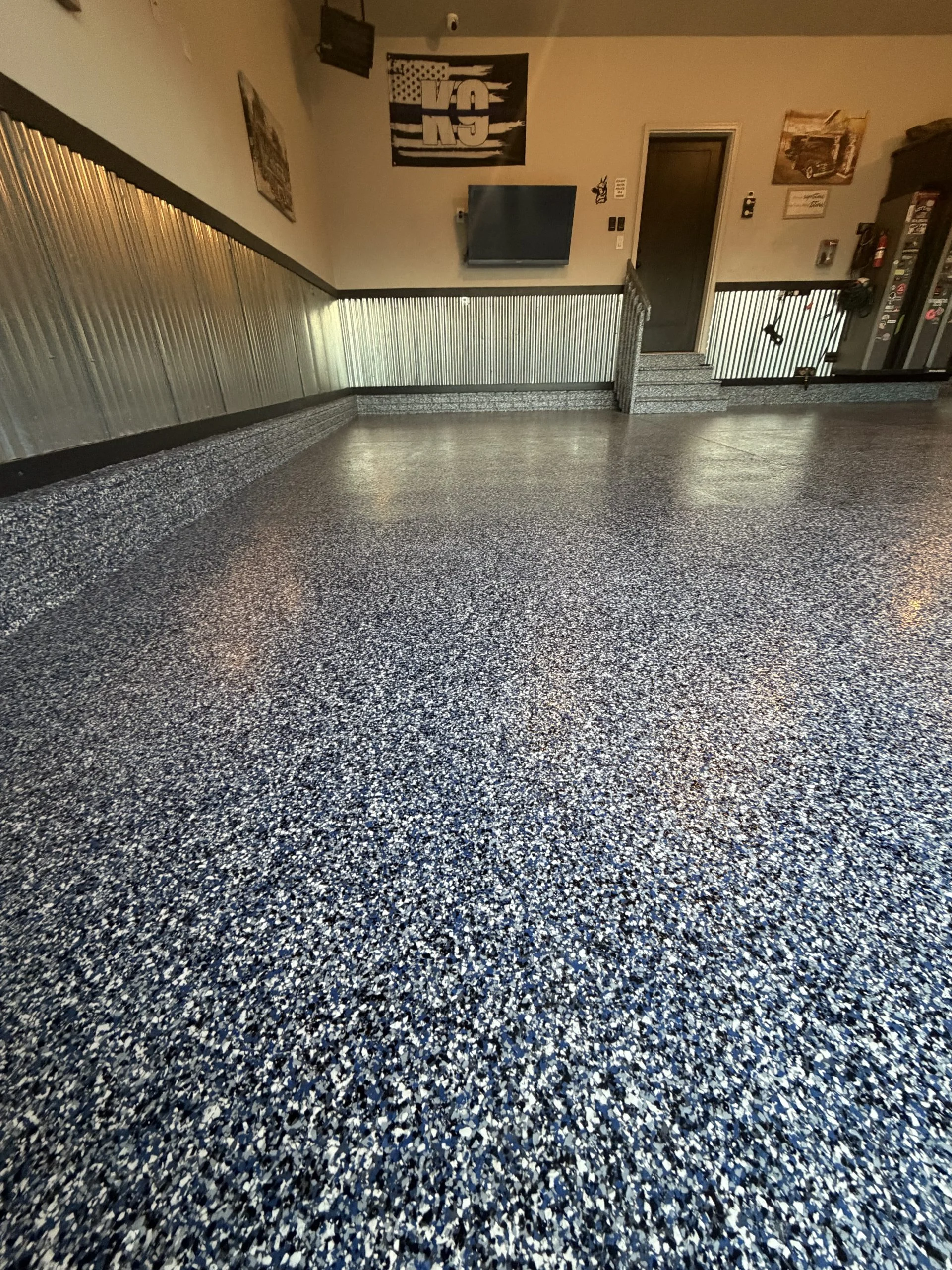
Yes. Flake flooring is one of our most popular systems for garages and other areas. Decorative vinyl flakes are broadcast into the coating to create a durable, attractive, and easy-to-maintain floor.
20. How much does an epoxy floor cost?
Every project is different. Pricing depends on the square footage, condition of the concrete, amount of preparation required, repairs, flooring system, color, decorative options, and number of coats. We provide personalized estimates based on your specific project.
21. How Much Does Commercial Epoxy Flooring Cost?
Commercial epoxy flooring cost depends on the total floor area, concrete condition, required surface preparation, traffic demands, and selected flooring system. Warehouses, showrooms, workshops, and other commercial facilities may require different coating specifications. We provide customized estimates based on the property’s flooring requirements and intended use.
22. Do you offer free estimates?
Yes. Contact Frontline Epoxy & Flooring to schedule a free estimate and discuss your project.
23. How Much Does Epoxy Garage Floor Coating Cost?
Generally, yes. The work area needs to be cleared before installation so we can properly prepare and coat the entire floor. We can discuss specific requirements when scheduling your project.
24. Can I park my vehicle on the floor right after installation?
No. Coatings need adequate time to cure before they are exposed to vehicle traffic. The exact time depends on the flooring system, temperature, humidity, and other conditions. We will provide specific return-to-service instructions for your floor.
25. Will my epoxy floor fade or yellow?
Epoxy garage floor coating cost depends on the size of your garage, existing concrete condition, surface preparation, crack repairs, and selected coating system. Decorative flake finishes, quartz systems, and protective topcoats can also influence overall pricing. Frontline Epoxy & Flooring provides personalized estimates based on your flooring requirements, helping you understand the available options before installation.
26. Do you guarantee your work?
We stand behind the quality of our workmanship and use professional flooring systems designed for long-term performance. Warranty terms can vary by flooring system and project, so ask about the applicable warranty when receiving your estimate.
27. Why should I choose Frontline Epoxy & Flooring?
We focus on professional surface preparation, quality flooring systems, attention to detail, and delivering a finished floor that looks great and is built for the demands of everyday use. Our goal is to provide Central Iowa customers with a flooring system they can be proud of.
28. How do I get started?
Getting started is easy. Contact Frontline Epoxy & Flooring to schedule your free estimate. We’ll evaluate your floor, discuss your goals and options, and provide a quote for your project
29. How long does installation take?
Most residential garage and similar flooring projects can be completed in approximately 1–3 days, depending on the size and condition of the concrete, the flooring system selected, and curing requirements.
Still Have Questions?
Let’s Talk About Your Flooring Project